Admissions
F01-招生資訊-完整頁面
Admissions
Why History · How to ApplyLearn about admissions to the Undergraduate Program, the Master's Program, and the PhD Program, from admission routes and selection methods to the credits required for graduation. Start here for the full details.
About the Department
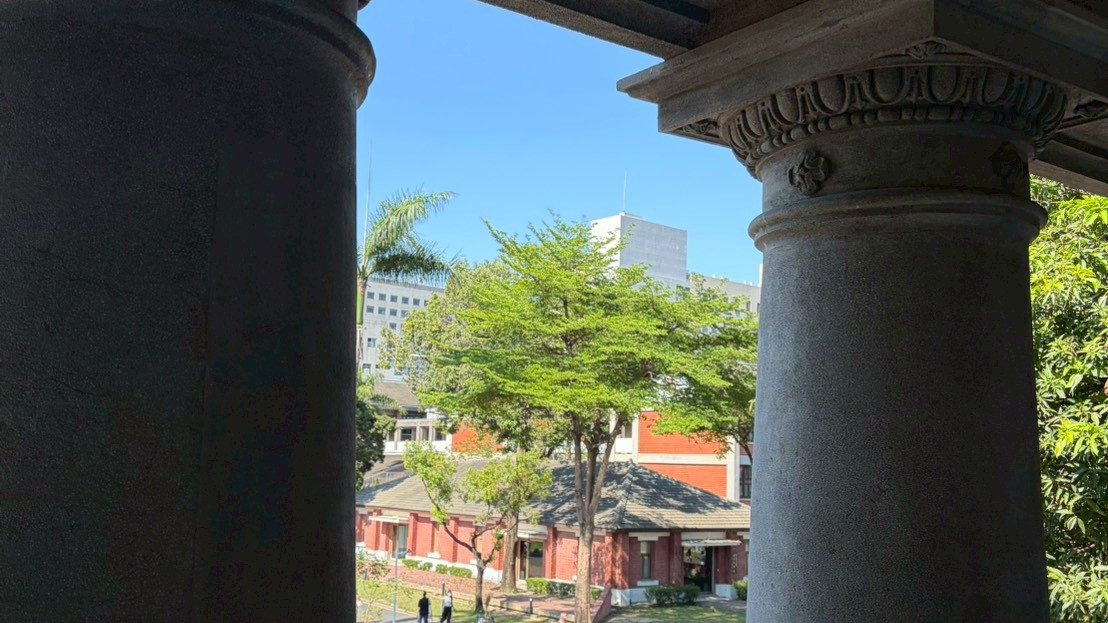
The Department was established on May 17, 1969, with the approval of the Ministry of Education, and currently offers an Undergraduate Program, a Master's Program, and a PhD Program. It is housed in NCKU's Former Liberal Arts Building, a national monument in Tainan, Taiwan's historic capital, and is the only history department in Taiwan with a building of its own.
In the 1970s, the Department collaborated with the Harvard-Yenching Institute on research in Taiwan history, becoming a pioneer in Taiwan history research among Taiwan's universities. Through the Historical Site Survey field program, in which teachers and students learn from one another, the Department has collected many Taiwanese historical artifacts, some of which are now held in the National Cheng Kung University Museum of History.
The Department has a strong faculty whose research and teaching cover a wide range of fields. Geographically, they span Taiwan, China, Northeast Asia, Southeast Asia, the Middle East, Greece, Rome, Britain, France, Ireland, Germany, and more. Thematically, they encompass economic history, social history, religious history, intellectual history, art history, women's history, historiophoty (history in film and television), oral history, history education, historical theory, public history, ecological history, and other fields.
Undergraduate Admissions
Admission routes to the Undergraduate Program are listed below; graduation requires 128 credits (General Education 28 + Required Major Courses 27 + Major Electives 73).
Admission by Application
Application Review Items
· Academic record
· Autobiography
· Study plan
· Club activities or other achievements
· Interest in science, the humanities, and people
Admission by Examination and Placement
Details Placement follows the procedures of the Joint Board of College Recruitment Commission (JBCRC), and General Scholastic Ability Test (GSAT) scores are taken into account.
Admission Guidelines Announced by the NCKU Admissions Committee.
Graduate Admissions
Master's Program: 30 credits, with Admission by Recommendation and Screening or General Admission. PhD Program: 36 credits, with admission through the General Entrance Examination.
Master's Program
30 Credits · Fields Covered: Chinese History / Taiwan History / World History / HistoriographyAdmission by Recommendation and Screening Announced every September
Stage 1 Review of application materials (transcripts, letters of recommendation, study plan, and other supporting materials)
Stage 2 Interview (with on-site questions drawn from the Department's designated reading list)
General Admission (Entrance Examination) Announced every November
Stage 1 Written examination (History; Analysis and Interpretation of Historical Sources)
Stage 2 Interview (with on-site questions drawn from the Department's designated reading list)
PhD Program
36 Credits · Also Required: PhD Qualifying Examination, Dissertation, and Oral DefenseGeneral Entrance Examination Announced every February
Stage 1 Review of application materials (transcripts, letters of recommendation, research proposal, master's thesis, and other publications)
Stage 2 Interview
A Guide for High School Students
Explore our faculty, the Curriculum Map, and the Learning Portfolio Guide to get to know History at NCKU early.
After Graduation
Our graduates follow a wide variety of paths.
Some go on to further study in history or related academic fields, such as anthropology, sociology, heritage conservation, museum studies, art, and education, and pursue academic research. Many complete the Teacher Education Program and go on to teach at senior or junior high schools. Some pass the Junior, Special, or Senior Civil Service Examinations and join government agencies as civil servants. Others go into business or politics, and still others work in publishing, journalism, the cultural sector, and other fields.